Home › Grand Prairie, TX
Poison Ivy Removal in Grand Prairie, TX
Poison Ivy Removal Kings provides poison ivy removal, poison oak removal, and poison sumac removal services in the Grand Prairie, TX area for both residential and commercial properties, from small yard patches to vines climbing trees and fences. Contact us now for a free estimate.
How Much Does Poison Ivy Removal Cost in Grand Prairie, TX?
Poison ivy removal in Grand Prairie, TX costs anywhere from $290 to $690 on average for a typical residential yard. The price depends on the size and density of the patch, where it grows (ground, fence, shrubs or trees), whether we spray, hand dig the roots or do both, ladder work, disposal, and follow-up visits. Contact us with photos for pricing.
Do You Cover All of Grand Prairie?
Yes, we take poison ivy removal requests across Grand Prairie and the rest of the Dallas-Fort Worth-Arlington, TX area. Labor and material costs here run about 2% below the national average, and the price range above already reflects that.
Do You Remove Poison Ivy From Homes and Commercial Properties?
Yes, we remove poison ivy from home yards, rental properties, schools, parks, and commercial grounds. Let us know the property type and roughly how big the area is.
Do You Also Remove Poison Oak and Poison Sumac?
Yes, we remove poison oak and poison sumac the same way we remove poison ivy.
Do You Service My Area?
Yes, we cover the Grand Prairie, TX area. Send us the property address and we'll confirm.
When Is the Best Time of Year to Remove Poison Ivy?
Late spring through early fall, while the leaves are fully out and the plant is growing. Cut vine treatments work slightly better in late summer and fall.
Can You Remove Poison Ivy in the Winter?
Yes, we can cut and dig vines in winter, but herbicides don't work well on dormant plants, so we usually come back in spring. Bare winter vines still carry the oil.
How Soon Can You Come Out?
Usually within a week, and small patches can sometimes be treated at the estimate visit. Spring and early summer book up fastest, so contact us early in the season.
What Information Do You Need When I Contact You?
We need the address, photos of the plants, roughly how big the patch is, and where it grows, such as a lawn, fence, shrub bed, or tree. Mention any gardens, ponds, or wells nearby.
Can You Identify Whether It's Really Poison Ivy?
Yes, we identify the plant before treating it. Virginia creeper and box elder seedlings are often mistaken for poison ivy, but creeper has five leaflets instead of three.
Will I Need to Be Home During the Removal?
No, as long as we can get to the area. Leave the gate unlocked, keep pets inside, and tell us about any underground sprinklers or invisible fencing.
Can I Request Removal if I Am Renting the Property?
Yes, but you'll need permission from your landlord or property manager first, since yard work and herbicide use are usually their call.
Can I Get a Price Before the Work Begins?
Yes, we confirm the price from your photos or a site visit before we start. If there's more poison ivy than expected, we talk to you before doing extra work.
Does Removing a Larger Patch Cost More?
Yes, bigger and denser patches take more labor, more product, and more disposal bags. Tree vines and ladder work also cost more than ivy on the ground.
Do You Haul Away the Poison Ivy After Removing It?
Yes, we bag it and haul it away with the trash. We never compost it or burn it, since the smoke carries the oil into your lungs.
Do You Remove the Dead Vines After Spraying?
Yes, if you want them gone. Dead vines and roots still carry the oil for a year or more, so we recommend pulling them out of gardens, paths, and play areas.
How Long Does Poison Ivy Removal Take?
Spraying a typical yard usually fits in one short visit. Hand digging the roots takes much longer, and the time grows with the size and density of the patch. We'll give you an estimate once we see photos.
How Many Treatments Does It Take to Get Rid of Poison Ivy?
Usually at least two. We typically follow up about a month after the first treatment, and heavy patches can take a season or two to clear.
Do You Remove the Roots?
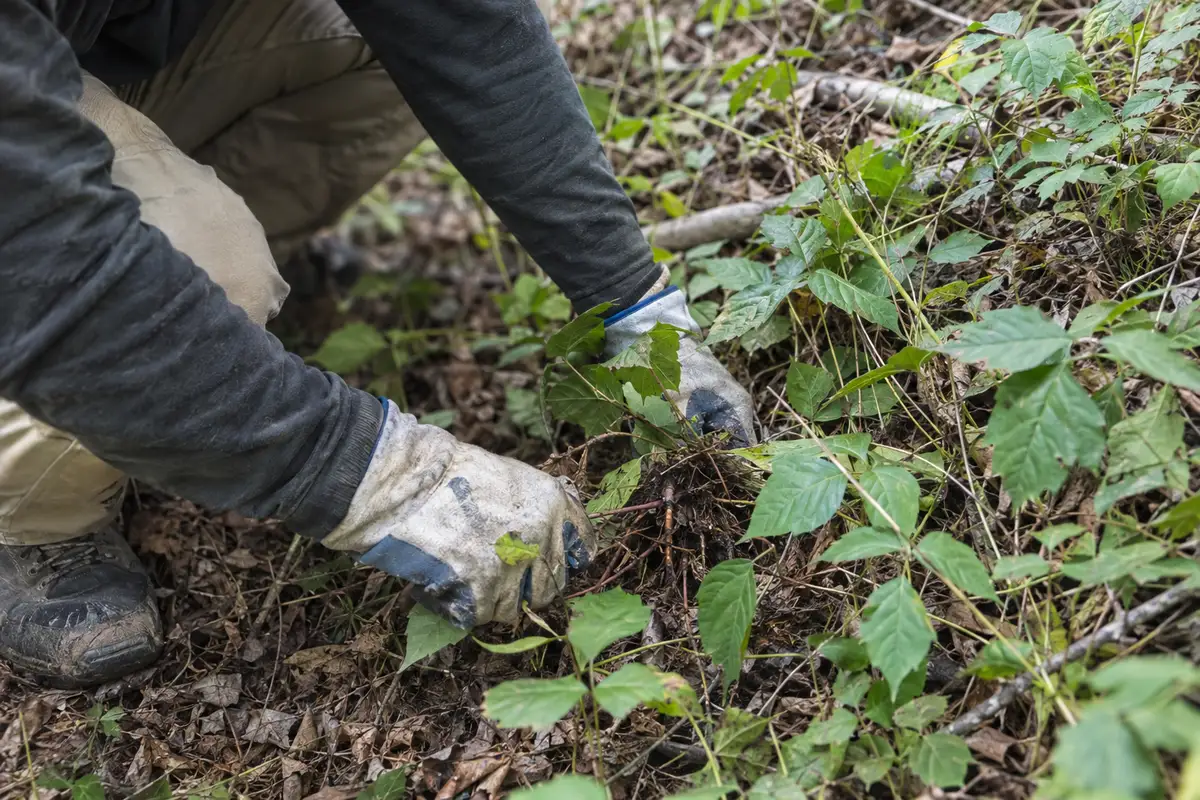
Yes, we either dig out the roots or use a systemic herbicide that travels from the leaves down to the roots. Even small root pieces left in the soil can regrow.
Will the Poison Ivy Come Back After Removal?
Yes, some regrowth is normal after the first treatment, from roots in the soil or seeds dropped by birds. We treat those new shoots on the follow-up visit.
Do You Guarantee the Poison Ivy Won't Come Back?
No, nobody can promise that, since birds keep dropping new seeds. We kill the treated plants down to the roots and come back for regrowth. Guarantee terms are confirmed when you contact us.
Can You Remove Poison Ivy Without Chemicals?
Yes, we can dig it out by hand, roots and all. It takes more labor and usually costs more than spraying.
Is the Herbicide Safe for My Kids and Pets?
Yes, in most cases once the spray has dried, which usually takes an hour or two. Keep kids and pets off the area until then, and we'll tell you what our product's label says.
Is It Safe to Remove Poison Ivy Myself?
Yes, for a small patch, if you wear long sleeves, waterproof gloves, and eye protection and bag everything. Skip it if you react badly, and never mow or burn it.
Can You Remove Poison Ivy Growing Up a Tree?
Yes, we cut the vine near the ground and again about a foot higher, remove that section, and treat the lower cut so the roots die. The upper vine dies in place, since pulling it off damages the bark.
Can You Remove Poison Ivy From a Fence Line?
Yes, we cut and treat poison ivy along wood, chain link, and vinyl fences. Tell us if it's coming through from a neighbor's side.
Can You Remove Poison Ivy Climbing My House or Siding?
Yes, we cut the vines at the base, let them dry, then scrape them off the wall. Pulling live vines off can damage siding, brick, and mortar.
Can You Remove Poison Ivy Mixed in With My Shrubs or Flower Beds?
Yes, we cut the ivy and paint only the cut stems, or dig it out by hand, so no herbicide lands on your plants. Point out the ones you want to keep.
Can You Remove Poison Ivy From My Lawn?
Yes, we spot treat it with a broadleaf herbicide labeled for your type of grass, since some southern grasses like St. Augustine and centipede are easily damaged. Tell us what grass you have.
Can You Clear Poison Ivy From a Large Wooded Area or Property Edge?
Yes, we clear wooded edges, trails, and larger lots. Bigger areas are usually priced by the hour or by the area, so send photos and a rough size.
Can You Remove Large, Hairy Poison Ivy Vines?
Yes, those thick, hairy vines are older plants covered in aerial rootlets. We cut them with loppers or a pruning saw and paint the cut with concentrated herbicide.
Can You Remove Poison Ivy Near a Pond, Creek, or Well?
Yes, we hand dig it or use herbicides labeled for use near water. Tell us how close the ivy is to the water.
Can You Remove Poison Ivy Coming From My Neighbor's Yard?
Yes, we can treat everything on your side of the property line. Expect it to keep coming through unless the neighbor's side gets treated too.
Can You Remove Poison Ivy Near a Vegetable Garden?
Yes, we hand dig or carefully spot treat near edible plants. Show us where the beds are so we can keep herbicide off them.
Can You Remove Poison Ivy if I Am Highly Allergic?
Yes, and if you react badly it's safer to let us handle it. Stay out of the area until everything is bagged and gone.
Can My Dog Get Poison Ivy?
No, pets rarely get the rash, but the oil on their fur spreads to people.
Should I Spray or Pull the Poison Ivy Before You Arrive?
No, leave it alone. Spraying or cutting it first makes the plants harder for us to find, and pulling it puts you at risk of a rash.
Should I Mow or Weed Eat Over the Poison Ivy?
No, mowers and string trimmers throw leaf bits and sap onto your skin. Leave it until we've treated it.
Can You Treat Poison Ivy in Rain or Wind?
No, we wait for a calm, dry day so the herbicide stays on the ivy.
What Do You Use to Kill Poison Ivy?
We use systemic herbicides, usually triclopyr or glyphosate, sprayed on the leaves or painted on cut vines. For digging, we use shovels, digging forks, loppers, and pruning saws.
Do You Need a License to Spray Poison Ivy?
Yes, in most states anyone spraying herbicide for hire needs a state pesticide applicator license. We can show you the label of any product we use.
Does Vinegar, Salt, or Bleach Kill Poison Ivy?
No, household vinegar, salt, and bleach won't kill the roots, and salt and bleach can damage your soil and nearby plants.
Are Goats a Good Way to Get Rid of Poison Ivy?
No, not on their own. Goats eat the leaves but not the roots, so they need to graze it repeatedly over several seasons.
How Do I Wash Clothes or Tools That Touched Poison Ivy?
Wash the clothes separately in regular detergent. Clean tools with warm soapy water or rubbing alcohol while wearing gloves, since the oil can stay on tools for years.
How Soon Can I Plant in the Area After Treatment?
Usually within days if we used glyphosate, since it breaks down in soil quickly, but triclopyr can linger for weeks. Check the label of the product we used before you plant.
